Bedrooms
Low sound, gentle airflow and sensible positioning matter as much as achieving the target temperature.
Air conditioning services across Kent
Heating and cooling designed for the rooms you use at home: bedrooms, living rooms, home offices, lofts and garden rooms. We assess your Kent property, compare single-room and multi-room options, and explain the equipment and installation in a clear written quotation.
A considered approach
Heating and cooling designed for the rooms you use at home: bedrooms, living rooms, home offices, lofts and garden rooms. We assess your Kent property, compare single-room and multi-room options, and explain the equipment and installation in a clear written quotation.
A bedroom needs quiet, gentle temperature control. A home office may need to offset computers, glazing and daytime sun. Living rooms, loft rooms, extensions and garden rooms each have different heat gains and patterns of use. Treating them as identical can lead to poor positioning or the wrong output.
Modern split systems can provide cooling in hot weather and responsive heating when temperatures fall. They do not need every room to be treated in the same way: a single-room system may solve one persistent comfort problem, while a multi-room design can give separate control to several regularly used spaces.
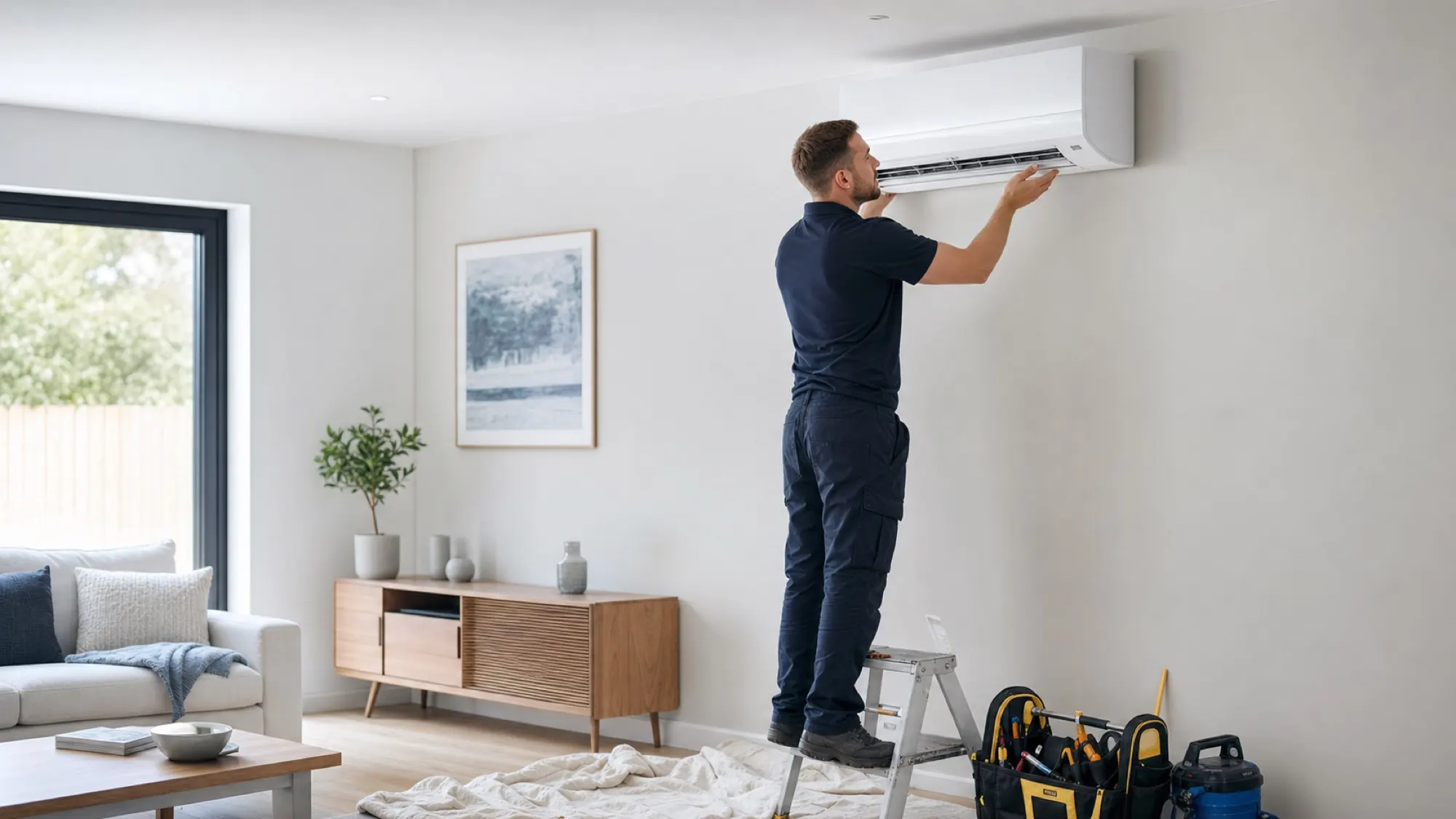
The survey should consider indoor appearance, outdoor-unit location, sound, drainage, pipe routes and future servicing as well as output. Flats, leasehold properties, listed buildings and some external positions may also require permission or additional checks before work is agreed.
What matters
The best result comes from understanding when the room is uncomfortable and what quiet, practical day-to-day use looks like for the household.
Low sound, gentle airflow and sensible positioning matter as much as achieving the target temperature.
Glazing, open-plan layouts, occupancy and afternoon sun can create larger and less predictable heat gains.
Compact rooms may gain heat quickly from equipment, insulation choices and direct sunlight during working hours.
How it works
A clear sequence makes it easier to understand the recommendation, scope and next decision.
Discuss when they become too hot or cold, who uses them and the comfort you want to achieve.
Consider dimensions, glazing, insulation, occupancy, equipment and suitable indoor and outdoor positions.
Compare a single-room or multi-room approach, controls, routes and the visible finish.
Confirm access, protection, likely disruption, equipment positions and how the system will be demonstrated.
Frequently asked questions
If you want to discuss your own system or property, call 07534 764304.
Modern indoor units can operate at low sound levels, but model selection, sizing and position all matter. The room and expected night-time use should be discussed before equipment is chosen.
Most modern split systems can heat as well as cool. This can be useful for individual rooms such as home offices, extensions and garden rooms where independent temperature control is valuable.
Not necessarily. The design should focus on the rooms that need active temperature control. Air does not reliably travel through closed doors, so separate rooms normally need their own considered solution.
It depends on the property and proposed external equipment position. Leasehold restrictions, planning controls, listed status and management-company rules may be relevant, so permission should be checked where applicable.
Request a free survey
Call now or use the main enquiry form and the team will recommend the right next step.
Plan your next step
Compare the options that fit your rooms, property and intended use.
Choose a fixed wall-mounted system for an individual room or compatible multi-room installation. We assess airflow, heating and cooling needs, indoor appearance and the practical route to the outdoor equipment before quoting.
Explore this option →Plan independent heating and cooling for two rooms, three rooms or a wider home. Compare compatible multi-split systems with separate single splits, then get an estimate and a survey-led written quotation.
Explore this option →Compare Mitsubishi Electric, Daikin, LG, Midea and electriQ by the requirements that matter in your rooms. The best choice is an appropriate model and well-planned installation, not automatically the highest-priced brand.
Explore this option →Qualifying installations
Take advantage of 0% VAT on qualifying installations until 31 March 2027.